
Mother Life Simulator Game
GamesCraft StudioRole Playing
4.5911.00 Reviews
- Version
- 18.8
- Installs
- 10.00M
- Age Rating
- Everyone
Screenshots


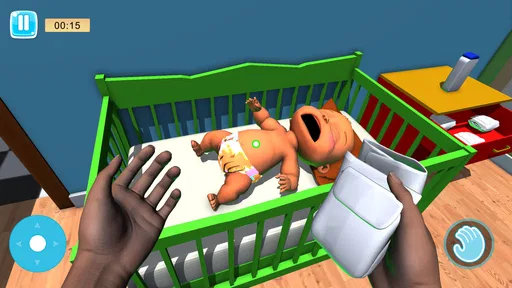



Our Review of Mother Life Simulator Game
 Analysis by Appyee
I approached Mother Life Simulator as a light role-playing game built around the idea of managing a virtual family life. Its central appeal is easy to understand: instead of fighting monsters or building a fantasy kingdom, you step into the daily responsibilities of a mother and work through a home-focused simulation. That change of setting gives the game a more familiar tone than many role-playing releases, especially for players who enjoy routine, simple objectives, and domestic scenarios.
After spending time with it, I see a game that is best enjoyed in short, relaxed sessions rather than as a deep life-management experience. It has a friendly premise, a broad audience, and a free entry point, but players should also approach it with realistic expectations. The store summary presents a happy virtual family life, while the actual reason to keep playing depends on whether you enjoy repeating everyday tasks and following the game’s guided activities.
What the family-life role-playing format feels like
GamesCraft Studio places this release in the role-playing category, although it is quite different from the character-driven adventures most people associate with that label. Here, the role comes from taking responsibility for a household rather than developing a warrior, collecting heroes, or exploring a large fantasy map. That familiar setting is the game’s clearest identity, and it makes the experience approachable from the first session.
I found the premise particularly suitable for players who want something uncomplicated. You do not need to learn a large cast of characters or understand a complicated fictional history before starting. The focus is on being present in the family scenario and completing the kind of activities that make the mother role feel active. For younger players and casual users, that directness can be more inviting than a traditional role-playing game filled with menus, statistics, and combat rules.
The game is free to download, which makes it easy to try without making an immediate financial commitment. It is marked for Everyone, so its presentation is aimed at a broad audience rather than a mature gaming crowd. It also supports devices running Android 7.0 or later, an important practical point for anyone using an older phone or tablet. The current version is 18.8, so I would check device compatibility before installing, particularly on hardware that has not been updated recently.
Its scale is reflected in its audience. The game has passed 10 million installs and holds an average rating of 4.5, which suggests that the basic concept has connected with many players. Those figures do not tell me whether every player enjoys the same parts of the experience, but they do show that this is an established casual title rather than an obscure experiment.
A practical game for short household scenarios
The strongest use case is a short break during an ordinary day. Imagine having a few minutes before leaving for work, while waiting for an appointment, or relaxing after finishing chores. A game about a virtual household can fit that moment better than a long adventure that expects uninterrupted attention. I would not choose it for a serious evening gaming session where I want a complex story, demanding strategy, or a strong sense of long-term character development.
That distinction matters because the family setting may initially sound broader than the actual play experience. A player might expect an open-ended digital home where every decision changes the family’s future. I would instead treat it as a guided role-playing activity: you take on the mother’s perspective, respond to the situation presented, and work through the available routine. The enjoyment comes from the theme and the small sense of responsibility, not from unlimited simulation depth.
For children, the approachable setting may be the main attraction. For adults, the appeal is more likely to be novelty and simplicity. I can see it working well for someone who has already played cooking, cleaning, parenting, or home-management games and wants a similar idea presented through a family-life role. It is less suitable for anyone looking for realistic parenting advice, because a game can turn daily care into a simplified activity without representing the emotional or practical complexity of real family life.
Progress is more about routine than mastery
One useful way to judge the game is to ask what kind of progress you want. In a conventional role-playing game, progress often means improving a character, unlocking a large world, or making choices that produce noticeably different outcomes. In this title, the motivation is tied more closely to completing the current family situation and seeing the household scenario move forward.
That structure can be comfortable. There is less pressure to memorize systems, optimize a character build, or keep up with a competitive community. I could pick it up without needing to remember a complicated plan from the previous session. For a casual player, that low mental load is a genuine strength. The trade-off is that repeated household activities may begin to feel predictable if you want constant surprises or increasingly difficult challenges.
I recommend playing it with a small personal goal rather than treating it like a game that must be finished as quickly as possible. Focus on learning how the activities are presented, notice which tasks you actually enjoy, and stop when the routine starts to feel like work. That approach helps preserve the relaxed quality of the concept. Trying to force long sessions can expose the limits of a simple family simulator much faster.
Another practical tip is to keep expectations separate from the word “role-playing.” If you want a game with equipment, combat, branching dialogue, or strategic party management, this is probably not the right choice. If you want to act out a domestic role through accessible scenarios, the label makes more sense. The game’s success depends on whether that narrower interpretation matches what you hoped to download.
Spending, pressure, and the fairness question
The financial starting point is straightforward: the game is free, with optional in-app purchases ranging from $0.99 to $11.99 per item. That gives curious players a chance to test the core experience before deciding whether it deserves money. I appreciate that arrangement for a casual title because the theme may appeal to one person immediately and leave another person uninterested after a few minutes.
At the same time, the purchase range means I would not describe the experience as entirely cost-free in practical terms. A free download can still present moments where a player feels tempted to spend, especially if progress becomes slower or an attractive option appears during play. The important point is to decide in advance whether you are comfortable using only the free path. If you are, keep that boundary clear instead of treating a small purchase as automatically harmless.
The fairest way to approach the spending system is to judge the free experience before paying for convenience. I would play long enough to decide whether the household activities themselves are enjoyable. Buying something cannot fix a theme that does not hold your attention, and it should not be necessary simply to discover whether you like the game’s basic rhythm.
The available purchase information establishes the price range, but it does not establish how each item affects progress or whether purchases are essential. I therefore would not promise that spending is purely cosmetic, nor would I claim that the game is pay-to-win. There is no meaningful competitive ranking angle in the experience as presented here, and the verified information does not describe a contest against other players. In fairness terms, that makes the main concern personal spending pressure rather than gaining an advantage over a human opponent.
For families sharing a device, I would set a simple rule before handing the game to a child: free play first, purchases only with permission. The Everyone rating describes the intended age suitability, but it does not replace a parent’s decision about spending. A child may understand the family scenario while still not understanding that an in-game item can create a real charge. That is a device-account issue worth handling separately from the game’s friendly presentation.
Is there competitive pressure?
This is not a title I would choose for competitive fairness in the usual sense. There is no reason in the confirmed description to treat it like a multiplayer battle, a ranked strategy game, or a social contest where paid advantages would decide the result. The relevant comparison is with other casual role-playing and simulation games that ask you to manage a character or household at your own pace.
That is good news for players who dislike leaderboards and performance pressure. You can approach the mother role as a private activity instead of worrying about being outplayed or falling behind a community. It also means that the game’s value should be judged by its atmosphere, accessibility, and routine rather than by depth of competition.
However, the absence of competitive pressure does not automatically make every monetization choice fair. A player can still feel rushed by locked progress, repeated prompts, or a purchase that seems placed between them and the next enjoyable moment. Since the confirmed details do not explain those specific mechanics, I would avoid making a stronger claim. My practical recommendation is to observe how the free route feels during your own first sessions and stop spending if the game begins to make ordinary progress uncomfortable.
What I would compare before installing
Compared with a traditional role-playing game, this one is much more grounded and less demanding. You are not downloading it for tactical combat, a dramatic quest line, or a large progression tree. Compared with a pure life simulator, it appears more focused on the mother-and-family premise than on building an unrestricted virtual world. That makes it easier to understand, but potentially less satisfying for players who want detailed customization and long-term freedom.
Compared with a parenting-themed educational app, it should be viewed as entertainment rather than guidance. The game may make family responsibilities feel interactive, but I would not use it to teach a child how real caregiving works. Real households involve unpredictability, communication, patience, and difficult decisions that a simplified game cannot fully reproduce. The title works better as imaginative play than as a practical lesson.
Compared with other free casual games, its strongest advantage is the specific setting. If you are tired of endless fantasy battles, matching puzzles, or generic character upgrades, the domestic role gives the session a different flavor. Its weakness is equally specific: if family routines do not interest you, there may be little else to keep you engaged. The theme is not a wrapper around a completely different game; it is the reason to play.
Who should try it, and who should skip it
I would recommend giving it a chance if you enjoy simple role-playing scenarios, family-centered stories, or games that can be played without a steep learning curve. It may also suit a younger player who wants to act out a familiar household role in a clearly presented digital setting. The free download makes the decision easy: install it, test the opening rhythm, and decide based on how the routine feels rather than on the large install count.
I would skip it if you need a deep simulation of family life, realistic consequences, or an expansive world that changes dramatically according to your decisions. I would also look elsewhere if you prefer fast action, competitive multiplayer, or a role-playing game with detailed character statistics. The game’s gentle premise cannot compensate for a mismatch in expectations.
One less obvious trade-off is that its simplicity can be both its best feature and its main limitation. A player who wants a calming, familiar activity may find the straightforward structure welcoming. A player who sees repetition as a lack of content may quickly lose interest. Before spending anything, ask yourself whether you enjoy repeating a role for its atmosphere, not just for the promise of unlocking something new.
What remains important to check during your own play
I would pay attention to three things during the first few sessions. First, notice whether the household tasks feel varied enough for you. Second, see whether the free progression remains comfortable without purchases. Third, watch how clearly the game communicates any paid option before you confirm it. These checks are more useful than assuming that a high rating guarantees the same experience for every player.
I would also consider the device you plan to use. Android 7.0 is the minimum operating system, but compatibility on paper does not tell me how comfortable the game will feel on every older phone. A smaller screen, limited storage, or weaker hardware can change the experience of any visual simulation. If the game feels cramped or sluggish on your main device, trying it on a larger compatible screen may give the family scenario a fairer chance.
Another sensible workflow is to play without purchases for a while, then decide whether an item would improve enjoyment or merely remove an annoyance. That difference is easy to overlook in a free game. If the only reason to buy is frustration with waiting or repeating a task, I would treat that as a warning rather than as proof that the purchase is good value.
My trust verdict for a free family simulator
My overall view is positive but measured. Mother Life Simulator has a clear identity, an accessible role-playing format, and a family setting that separates it from combat-heavy alternatives. GamesCraft Studio has made a title that can fit casual play, especially for people who want a simple virtual household scenario rather than a demanding adventure.
The game’s popularity and 4.5 average rating make it reasonable to try, but they should not replace your own judgment. The experience is likely to work best when you accept its modest scope. Think of it as a short-form family role-play game, not as a complete reproduction of motherhood or a fully open-ended life simulator.
On spending, I would stay cautious without being alarmist. The free entry point is useful, and the listed purchases are clearly priced between $0.99 and $11.99 per item. What matters is whether the free route remains enjoyable and whether you feel in control of your choices. Since the confirmed details do not explain the exact role of each item, I would not make purchases until you have personally seen what they do and decided that the benefit is worth it.
For me, the best reason to install it is curiosity about its family-life perspective. The best reason to uninstall it would be finding that the routine feels repetitive or that you wanted a deeper simulation than it provides. I would recommend trying the free version to casual role-playing fans, younger players with appropriate purchase supervision, and anyone looking for a gentle change from familiar game genres. I would point serious simulation fans and competitive players toward another option.
In short, this is a friendly, focused game with a very particular audience. Its value comes from stepping into an everyday family role for a while, not from technical complexity or competitive achievement. If that sounds relaxing rather than limiting, the free download gives you a sensible way to find out whether its virtual household feels enjoyable in your own hands.
Verdict
Strengths of Mother Life Simulator Game
- Caring for the baby feels engaging and gives each task a clear purpose.
- Simple controls make the game accessible for younger and casual players.
- Daily routines offer a relaxing change of pace from action-focused games.
- Bright visuals and friendly character designs create a welcoming atmosphere.
- Short activities are convenient for quick play sessions on mobile devices.
Limitations of Mother Life Simulator Game
- Tasks can become repetitive after completing the same household routines.
- Some features may be locked behind ads or in-app purchases.
- The game may feel too easy for players seeking a serious simulation.
- Occasional touch-control issues can make precise actions frustrating.
- Progress may feel slow without watching optional advertisements.
Similar Picks in This Category
View All
Hair Dye
CrazyLabs LTD4.4

Monster High™ Beauty Salon
CrazyLabs LTD4.5

Bus Simulator - Bus Games 3D
Jima Apps4.4

Flight Pilot: 3D Simulator
Wildlife Studios4.1


Super Stylist Fashion Makeover
CrazyLabs LTD4.4
Frequently Asked Questions
What is Mother Life Simulator Game about?
Mother Life Simulator Game is a casual simulation experience focused on managing everyday family responsibilities. Players typically organize household tasks, care for children, prepare meals, complete errands, and handle time-based challenges. The game presents these activities through simple objectives and interactive environments, making it easy to understand for newcomers while offering a light, routine-focused gameplay style rather than a complex strategy system.
Is Mother Life Simulator Game free to download and play?
The game can generally be downloaded free of charge, although the exact availability and pricing may depend on whether you use Android or iOS. Free versions may include advertisements, optional purchases, or locked content that can be unlocked through progress or payment. Before installing, check the store listing for current in-app purchase details, supported devices, and any restrictions in your region.
Does the game require an internet connection?
Mother Life Simulator Game may allow some of its basic activities to be played offline, but certain features can depend on an internet connection. Advertising, updates, cloud-related services, analytics, and purchases may not work without access to the internet. If offline play is important to you, test the game after installation with mobile data and Wi-Fi disabled, since requirements can change between versions.
Is Mother Life Simulator Game suitable for children?
The game is designed around family life and everyday household activities, so its general theme is usually accessible to younger players. However, parents should still review the age rating, advertisements, language, permissions, and optional purchases shown on the relevant app store. Gameplay may also include time pressure or repetitive tasks, so supervision is recommended for children who use the device independently.
What devices are compatible with Mother Life Simulator Game?
Compatibility depends on the version available for your operating system. Most recent Android and iOS phones and tablets should be able to run the game, but older devices may experience slower loading, reduced graphics quality, crashes, or limited storage space. Check the official store page before downloading for the required operating-system version, available storage, and developer notes about supported hardware.
Play our best games!


